- 签证留学 |
- 笔译 |
- 口译
- 求职 |
- 日/韩语 |
- 德语

Before exploring common symptoms, review the mechanisms and clinical patterns of abdominal pain. There are three broad categories of abdominal pain:
■ Visceral pain occurs when hollow abdominal organs such as the intestine or biliary tree contract unusually forcefully or are distended or stretched (Fig. 1). Solid organs such as the liver can also become painful when their capsules are stretched. Visceral pain may be difficult to localize. It is typically palpable near the midline at levels that vary according to the structure involved, as illustrated on the next page. Ischemia also stimulates visceral pain fibers.
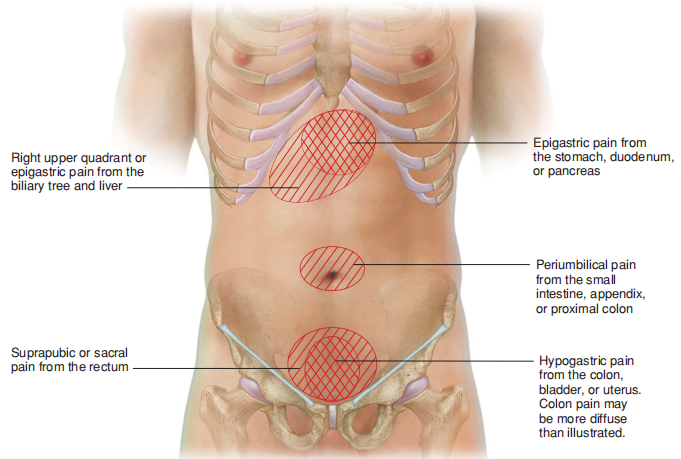
FIGURE 1. Types of visceral pain.
■ Parietal pain originates from inflammation of the parietal peritoneum, called peritonitis. It is a steady, aching pain that is usually more severe than visceral pain and more precisely localized over the involved structure. It is typically aggravated by movement or coughing. Patients with parietal pain usually prefer to lie still.
■ Referred pain is felt in more distant sites which are innervated at approximately the same spinal levels as the disordered structures. Referred pain often develops as the initial pain becomes more intense and seems to radiate or travel from the initial site. It may be palpated superficially or deeply but is usually localized.
Pain may also be referred to the abdomen from the chest, spine, or pelvis, further complicating the assessment of abdominal pain.
责任编辑:admin