- 签证留学 |
- 笔译 |
- 口译
- 求职 |
- 日/韩语 |
- 德语

Carefully assess skull symmetry (Fig. 1). Various conditions can cause asymmetry; some are benign, while others reflect underlying pathology.

FIGURE 1. Skull shape and symmetry should be assessed.
Look for asymmetric head swelling. A newborn's scalp may be swollen over the occipitoparietal region. This is called caput succedaneum and results from capillary distention and extravasation of blood and fluid resulting from the vacuum effect of rupture of the amniotic sac. This swelling typically crosses suture lines and resolves in 1 to 2 days.
The premature infant's head at birth is relatively long in the occipitofrontal diameter and narrow in the bitemporal diameter (dolichocephaly). Usually, the skull shape normalizes within 1 to 2 years.
Pick up the infant and examine the skull shape from behind. Asymmetry of the cranial vault (positional plagiocephaly) occurs when an infant lies mostly on one side, resulting in a flattening of the parieto-occipital region on the dependent side and a prominence of the frontal region on the ipsilateral side. It disappears as the baby becomes more active and spends less time in one position, and symmetry is almost always restored. Interestingly, the current trend to have newborns sleep on their backs to reduce the risk for sudden infant death syndrome (SIDS) has resulted in more cases of positional plagiocephaly (Fig. 2). This condition can be prevented by frequent repositioning (providing "tummy time" when the infant is awake).
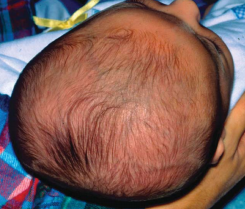
FIGURE 2. Careful assessment may reveal plagiocephaly
Measure the head circumference to detect abnormally large head size (macrocephaly) or small head size (microcephaly), both of which may signify an underlying disorder affecting the brain.
Palpate along the suture lines. A raised, bony ridge at a suture line suggests craniosynostosis.
Palpate the infant's skull with care. The cranial bones generally appear "soft" or pliable; they will normally become firmer with increasing gestational age.
责任编辑:admin