- 签证留学 |
- 笔译 |
- 口译
- 求职 |
- 日/韩语 |
- 德语

Membranous tissue spaces called sutures separate the bones of the skull from one another. The areas where the major sutures intersect in the anterior and posterior portions of the skull are known as fontanelles. Examine the sutures and fontanelles carefully (Fig. 1).
On palpation, the sutures feel like ridges and the fontanelles like soft concavities. The anterior fontanelle at birth measures 4 to 6 cm in diameter and usually closes between 2 and 26 months of age (90% between 7 and 19 months). The posterior fontanelle measures 1 to 2 cm at birth and usually closes by 2 months.
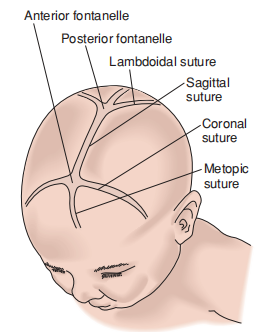
FIGURE 1. Sutures and fontanelles.
Carefully examine the fontanelle, because its fullness reflects intracranial pressure. Palpate the fontanelle while the baby is sitting quietly or being held upright. Clinicians often palpate the fontanelles at the beginning of the examination. In normal infants, the anterior fontanelle is soft and flat. A full anterior fontanelle with increased intracranial pressure is seen when a baby cries or vomits. Pulsations of the fontanelle reflect the peripheral pulse and are normal (and parents often inquire about them). Learn to palpate the fontanelle because a bulging fontanelle is concerning for increased intracranial pressure and a depressed
fontanelle may suggest dehydration.
Inspect the scalp veins carefully to assess for dilatation.
责任编辑:admin