- 签证留学 |
- 笔译 |
- 口译
- 求职 |
- 日/韩语 |
- 德语

The brain has four regions: the cerebrum, the diencephalon, the brainstem, and the cerebellum. Each cerebral hemisphere is subdivided into frontal, parietal, temporal, and occipital lobes.
The central nervous system (CNS) of the brain is a vast network of interconnecting nerve cells, or neurons, consisting of cell bodies and their axons—single long fibers that conduct impulses to other parts of the nervous system.
Brain tissue may be gray or white. Gray matter consists of aggregations of neuronal cell bodies. It rims the surfaces of the cerebral hemispheres, forming the cerebral cortex. White matter consists of neuronal axons that are coated with myelin. The myelin sheaths, which create the white color, allow nerve impulses to travel more rapidly.
Deep in the brain lie additional clusters of gray matter (Fig. 1). These include the basal ganglia, which affect movement, and the thalamus and the hypothalamus structures in the diencephalon. The thalamus processes sensory impulses and relays them to the cerebral cortex. The hypothalamus maintains homeostasis
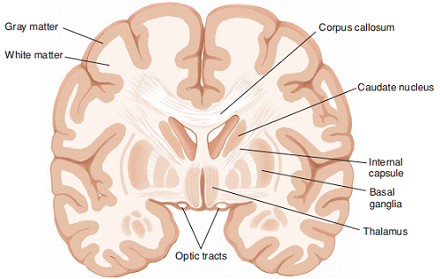
FIGURE 1. Brain anatomy—coronal section.
and regulates temperature, heart rate, and blood pressure. The hypothalamus affects the endocrine system and governs emotional behaviors such as anger and sexual drive. Hormones secreted in the hypothalamus act directly on the pituitary gland.
The internal capsule is a white-matter structure where myelinated fibers converge from all parts of the cerebral cortex and descend into the brainstem. The brainstem, which connects the upper part of the brain with the spinal cord, has three sections: the midbrain, the pons, and the medulla.
Consciousness relies on the interaction between intact cerebral hemispheres and a structure in the diencephalon and upper brainstem, the reticular activating (arousal) system.
The cerebellum, which lies at the base of the brain, coordinates all movement and helps maintain the body upright in space.
责任编辑:admin