- 签证留学 |
- 笔译 |
- 口译
- 求职 |
- 日/韩语 |
- 德语

Note physiologic changes of aging, such as thinning, loss of elastic tissue and turgor, and wrinkling. Skin may be dry, flaky, rough, and often itchy (asteatosis), with a latticework of shallow fissures that creates a mosaic of small polygons, especially on the legs.
Observe any patchy changes in color. Check the extensor surface of the hands and forearms for white depigmented patches, or pseudoscars, and for well-demarcated vividly purple macules or patches, actinic purpura, that may fade after several weeks (Fig. 1).
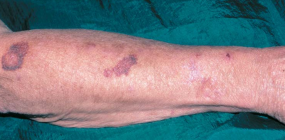
FIGURE 1. Actinic purpura on forearm.
Look for changes from sun exposure. Areas of skin may appear weather beaten, thickened, yellowed, and deeply furrowed; there may be actinic lentigines, or "liver spots," and actinic keratoses, superficial flattened papules covered by a dry scale.
Inspect for the benign lesions of aging, namely comedones, or blackheads, on the cheeks or around the eyes; cherry angiomas, which often appear early in adulthood; and seborrheic keratoses, raised yellowish lesions that feel greasy and velvety or warty.
Watch for any painful vesicular lesions in a dermatomal distribution. In older bed-bound patients, especially those emaciated or neurologically impaired, inspect the skin for damage or ulceration on the sacral and perianal areas, the lower back, heels, and elbows where pressure ulcers commonly occur.
责任编辑:admin