Sjoegren's syndrome (SjS) is a chronic autoimmune inflammatory disease characterised by a triad of clinical features: dry mouth (xerostomia), dry eyes (keratoconjunctivitis sicca) and arthritis. SjS can occur alone as primary SjS or in association with other autoimmune diseases—secondary SjS. One study evaluating the radiological and pathological manifestations of lung diseases associated with primary SjS found that NSIP was the most common entity; other pathologies included bronchiolitis, lymphoma, amyloid and atelectasis. HRCT studies have demonstrated LIP in patients with Sjoegren's syndrome, the imaging findings of which are described under the section on the IIPs. The association of LIP and amyloidosis (manifesting on HRCT as multiple irregular nodules with cysts) in patients with SjS is recognised (Fig. 1), but as these patients are also at increased risk of pulmonary lymphoma, the finding of LIP on HRCT in conjunction with multiple nodules in a patient with SjS should at least prompt the consideration of a neoplastic process.
Classic HRCT Findings
• The most frequent interstitial pneumonias in SjS are NSIP and LIP
• Mild bronchiectasis is common
• Lymphoproliferative disease may occur on a background of LIP
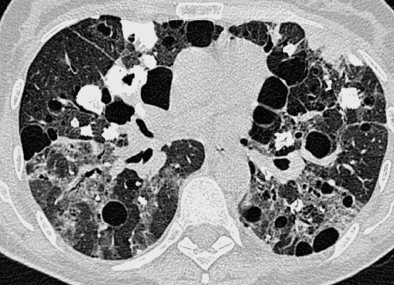
FIGURE 1 ■ Sjoegren's syndrome. Lymphoid interstitial pneumonia and amyloid. There are numerous thin-walled cysts in association with multiple irregular solid nodules, some of which are heavily calcified. Histopathological examination showed marked thickening of the interstitium with an infiltrate of small, mature lymphocytes and plasma cells. Multiple deposits of amyloid were seen throughout the specimen and there was no evidence of malignancy
责任编辑:admin
上一篇:没有了
下一篇:医学文章阅读——LYMPHANGIOLEIOMYOMATOSIS

微信公众号搜索“译员”关注我们,每天为您推送翻译理论和技巧,外语学习及翻译招聘信息。