Carefully assess respirations and breathing patterns. Newborns, especially those born prematurely, show periods of normal rate (30 to 40 per minute) alternating respirations that may even cease for 5 to 10 seconds. This alternating pattern of rapid and slow breathing is called "periodic respiration" or "periodic breathing."
Do not rush to the stethoscope. Instead, observe the infant carefully as demonstrated in Figure 1, which demonstrates locations for retractions among infants. Inspection is easiest when infants are not crying; thus, work with the parents to settle the child. Observe for 30 to 60 seconds, note general appearance, respiratory rate, color, nasal component of breathing, audible breath sounds, and work of breathing, as described below.
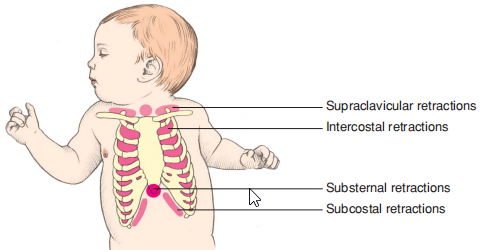
FIGURE 1. Anatomic locations of retractions (chest indrawing).
Because infants are obligate nasal breathers, observe their nose as they breathe. Look for nasal flaring. Observe breathing with the infant's mouth closed or during nursing or sucking on a bottle to assess for nasal patency. Listen to the sounds of breathing; note any grunting, audible wheezing, or lack of breath sounds (obstruction).
Nasal flaring, grunting, retractions, and wheezing are all signs of respiratory distress. Observe two aspects of the infant's breathing: audible breath sounds and work of breathing. These are particularly relevant in assessing both upper and lower respiratory illness. Studies in countries with poor access to chest radiographs have found these signs at least as useful as auscultation. Any of the abnormalities listed
below should raise concern about underlying respiratory pathology.
In healthy infants, the ribs do not move much during quiet breathing. Any outward movement is produced by descent of the diaphragm which compresses the abdominal contents and in turn shifts the lower ribs outward. Pulmonary disease causes increased abdominal breathing and can result in retractions (chest indrawing), an indicator of pulmonary disease before 2 years of age.
Chest indrawing is inward movement of the skin between the ribs during inspiration. Movement of the diaphragm primarily affects breathing with little assistance from the thoracic muscles. As mentioned in the preceding table, four types of retractions can be noted in infants: suprasternal, intercostal, substernal, and subcostal.
Thoracoabdominal paradox, inward movement of the chest and outward movement of the abdomen during inspiration (abdominal breathing), is a normal finding in newborns (but not older infants). It persists during active, or rapid eye movement (REM), sleep even when it is no longer seen during wakefulness or quiet sleep because of the decreased muscle tone of active sleep. As muscle strength increases and chest wall compliance decreases with age, abdominal breathing should no longer be noted. If observed, it may signify respiratory disease.
责任编辑:admin
上一篇:没有了
下一篇:医学英语阅读——Examining the Mouth and Pharynx of Infant

微信公众号搜索“译员”关注我们,每天为您推送翻译理论和技巧,外语学习及翻译招聘信息。